Home
#HeaderServicesLinks
Call: +1-866-805-8548
Cooling Specialists Available 24/7

Ac Repair in Los Angeles, CA

When your AC stops cooling, every hour matters. Our certified technicians pinpoint the exact failure -- compressor, refrigerant charge, condenser coil, or blower motor -- and get your system back to peak performance fast.

EPA 608 Certified
Same-Day Response
NATE Certified Technicians
Written Upfront Quotes
12-Month Labor Warranty

Restoring Cooling Performance Through Accurate Diagnosis

An air conditioning system that runs but doesn't cool is often more confusing than one that simply won't start. The symptom is clear, but the cause could be any one of a dozen components in the refrigerant circuit or the airside of the system. At All Year HVAC, our AC repair technicians in Los Angeles don't default to the most expensive answer or the most common answer. They work through a structured diagnostic process that measures the actual performance gap and traces it back to the specific component creating it.

Cooling performance issues almost always show up first in temperatures. When a system runs for 15 minutes and the supply air temperature is only 10 degrees cooler than the return air temperature, instead of the 18 to 22 degrees it should be, that tells us something useful. It could point to low refrigerant charge, a partially restricted metering device, a dirty condenser coil reducing heat rejection, or a compressor that's not building sufficient discharge pressure. Each of those possibilities has a distinct measurement profile, and our technicians use digital manifold gauges with real-time superheat and subcooling calculations to distinguish them cleanly.

Our team carries equipment for every type of refrigerant in residential and light commercial AC systems -- R-22, R-410A, R-32, and R-454B included. When refrigerant loss is confirmed, we find the leak source using electronic detection and UV dye tracing before adding any refrigerant. Simply topping off a system without addressing the leak is a temporary patch that wastes money and harms the environment. We believe in solving the actual problem the first time.

The mechanical side of AC repair involves more than the refrigerant circuit. Blower motors, condenser fan motors, capacitors, contactor assemblies, and control boards all play a role in cooling performance and each degrades in its own way. A condenser fan motor drawing 20% more amperage than its rated load is close to failure and already reducing the efficiency of the entire refrigerant circuit. We measure these things because a thorough technician looks at the whole system, not just the component that triggered the call. That complete view is how we prevent the second service call that comes three weeks after an incomplete repair.
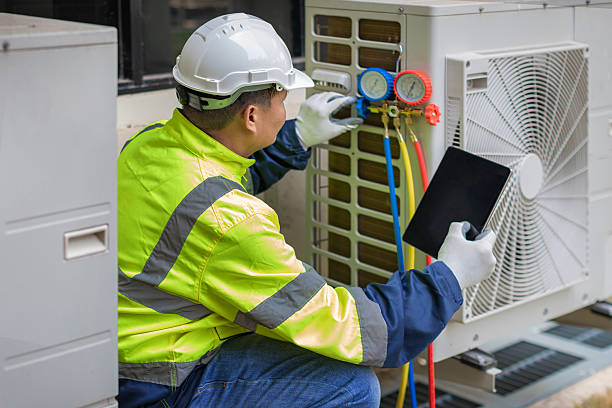
Ac Repair in Los Angeles Los Angeles, CA

What Our AC Repair Team Specializes In

Every repair is diagnosed at the component level. We tell you exactly what failed and why before we quote a price.

Compressor Diagnosis and Repair

The compressor is the costliest component in your AC system, and a misdiagnosed compressor replacement is an expensive mistake. Before recommending a compressor, our technicians perform a full electrical test -- winding resistance, ground fault check, and run capacitor load test -- combined with suction and discharge pressure measurement under actual operating conditions to confirm whether the compressor itself is the failure point or if another system condition is causing it to underperform.

  • Compressor winding resistance verification
  • Hard-start kit installation when indicated
  • Compressor lubrication oil analysis
  • Complete system flush before compressor replacement

Refrigerant Leak Detection and Recharge

A refrigerant undercharge reduces cooling capacity, causes evaporator coil icing, and forces the compressor to work against abnormal pressure ratios that shorten its lifespan. We locate every leak point using dual electronic and UV dye methods, perform EPA-compliant recovery of remaining refrigerant, repair the leak source, pressure-test and evacuate the system, and recharge to the exact manufacturer specification verified by subcooling measurement.

  • Dual-method leak location (electronic + UV)
  • EPA 608-compliant recovery and handling
  • System pressure test before recharge
  • Subcooling-verified final charge

Condenser Coil Cleaning and Repair

A fouled condenser coil raises system head pressure, reduces heat rejection efficiency, and can drive compressor discharge temperatures high enough to trigger thermal protection. We use low-pressure coil cleaning solutions and professional equipment to restore the coil's heat transfer capacity without damaging fins. In cases of physical coil damage, bent fins, or corrosion, we evaluate whether coil repair or replacement is the more cost-effective path.

  • Chemical coil cleaning and flush
  • Fin straightening and coil restoration
  • Head pressure verification after service
  • Fan blade and shroud inspection

Run Capacitor and Contactor Replacement

Capacitors and contactors are high-failure components that are often the simplest and least expensive repair in an AC system. A run capacitor that's lost 10% or more of its rated capacitance causes motors to run hotter, draw more current, and fail prematurely. We test capacitors under load with a calibrated digital micro-farad meter rather than relying on visual inspection alone. Contactors are checked for pitting, arc damage, and coil voltage to ensure reliable operation through the rest of the cooling season.

  • Digital micro-farad capacitor testing
  • Dual run capacitor replacement
  • Contactor pull-in voltage verification
  • Motor amperage confirmation after service

Blower Motor and Evaporator Airflow Repair

Inadequate airflow across the evaporator coil causes the coil surface temperature to drop below freezing, leading to ice formation that eventually blocks airflow entirely and can cause liquid refrigerant to return to the compressor. We measure external static pressure, calculate actual airflow in CFM, and compare it against system design parameters to determine whether the problem is the motor, wheel, filter restriction, or duct design. Then we address the actual cause rather than just thawing the coil and leaving.

  • Static pressure and CFM measurement
  • Blower wheel cleaning and rebalancing
  • ECM and PSC motor testing and replacement
  • Post-repair evaporator temperature verification

Thermostat and Control System Calibration

A faulty thermostat or miscommunication between the thermostat and the control board can produce cooling symptoms that mimic compressor failure, refrigerant loss, or sensor faults. We verify thermostat output voltage at each terminal, check the control board's input and output signals, and confirm that the system cycles on and off at the correct setpoints. We also evaluate smart thermostat compatibility when a wiring mismatch is the root cause of intermittent cooling complaints.

  • Terminal voltage verification under call
  • Control board signal tracing
  • Smart thermostat compatibility assessment
  • Setpoint calibration and drift correction
2hr
Avg. Summer Response Time
97%
Same-Day Repair Rate
12mo
Parts and Labor Warranty
24/7
Emergency Availability

The AC Repair Team Los Angeles Trusts

Measurement-Based Diagnosis

Every diagnosis starts with actual measurements -- superheat, subcooling, static pressure, amperage -- not assumptions based on symptom alone.

Rapid Summer Response

When temperatures in Los Angeles, CA peak, we prioritize AC repair calls with dedicated summer dispatch and additional technician coverage for peak demand.

No Surprise Billing

You see the full repair cost in writing before any work starts. What you approve is what you pay. No add-ons, no labor adjustments after the fact.

Parts Stocked On Every Truck

Capacitors, contactors, motors, sensors, and refrigerant in the most common residential grades are stocked so we complete most jobs on the first visit.

From First Call to Cold Air

We keep you informed at every stage. No guesswork, no waiting in the dark.
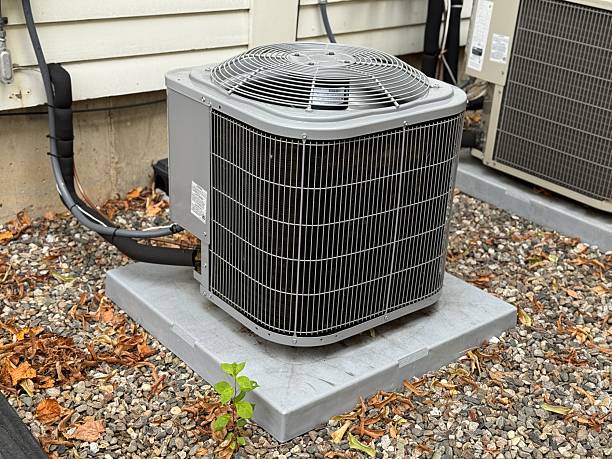
AC repair process
1

Rapid Dispatch and ETA Confirmation

We confirm your appointment time and send a technician ETA so you're not waiting around all day. During peak summer periods, our dispatch prioritizes complete system failure calls first.

2

Performance and Component Diagnosis

The technician measures system performance at the condenser and air handler -- pressures, temperatures, airflow, motor amperage -- and tests components in the identified failure zone using calibrated instruments.

3

Clear Written Repair Quote

You receive a written quote with the failed component identified, the specific repair required, and the total cost including parts and labor. Nothing starts without your go-ahead.

4

Repair, Performance Test, and Warranty

After the repair, we run the system through a full cooling cycle, verify supply air temperature and system pressures are within spec, and issue your written 12-month warranty document.

Real Results for Los Angeles Homeowners

★★★★★

"Three other companies told me I needed a new compressor. All Year HVAC ran the numbers, found a refrigerant leak and a failing capacitor, fixed both, and my system has been running perfectly through the whole summer. Saved me thousands."

Christine B.
Homeowner, Los Angeles CA
★★★★★

"Called at 8am, technician was here by noon. Found a fouled condenser coil and a contactor that was arcing. Cleaned the coil, replaced the contactor, system was putting out 19-degree temperature differential on the first test cycle. Excellent work."

James F.
Property Owner, Los Angeles, CA
★★★★★

"The tech explained everything in plain language, showed me the capacitor readings on his meter so I could see why it needed replacing, and didn't try to sell me anything extra. Honest, fast, and the AC has been ice cold ever since."

Maria S.
Homeowner, Los Angeles

AC Repair FAQs

An AC system that runs continuously without cooling the space is usually experiencing one of several conditions: low refrigerant charge from a leak, a restricted metering device that's starving the evaporator, a dirty condenser coil that can't reject heat efficiently, or an iced evaporator coil blocking airflow. The system is operating -- the fan runs, the compressor may be running -- but the thermodynamic cycle isn't completing efficiently. In some cases, an oversized system that short-cycles may never run long enough to properly dehumidify, which makes the space feel warmer than the thermostat setting despite hitting the set temperature. A proper diagnosis measures the temperature differential between supply and return air and the system's operating pressures to identify the specific cause.
A properly installed and sealed AC system should never need refrigerant added. Refrigerant is not consumed the way fuel is -- it circulates in a closed loop. If a system needs refrigerant, it has a leak. Adding refrigerant without finding and fixing the leak is a temporary measure that will be needed again, typically within one to three seasons. Over time, a system operating with a low charge causes compressor damage from liquid refrigerant returning to the suction line and from elevated compression ratios. The EPA also requires that refrigerant leaks above a certain threshold be repaired rather than simply recharged, particularly in commercial equipment.
Evaporator coil icing occurs when the coil surface temperature drops below 32 degrees, which happens when either the refrigerant pressure is too low or the airflow across the coil is too low. Low refrigerant charge is the most common cause -- insufficient refrigerant means lower evaporator pressure and lower coil temperatures. Restricted airflow from a clogged filter, closed supply registers, or a failing blower motor can produce the same result because the coil absorbs less heat from the air and its surface temperature drops accordingly. A correctly charged and properly airflowed system should never ice up under normal operating conditions. If ice forms, turn the system to fan-only mode to thaw the coil before any diagnostic work -- attempting to run a frozen system risks compressor damage.
Compressor failure has several presentations. Hard starting -- where the compressor struggles to start and may trip the breaker or high-pressure switch -- often indicates worn valve assemblies or a weak start capacitor. A compressor that runs but produces inadequate compression will show suction pressure higher than normal and discharge pressure lower than normal, resulting in poor cooling performance. Loud clicking, grinding, or rattling during operation can indicate internal mechanical failure or refrigerant slugging. Compressor electrical failure shows up as an open or shorted winding on resistance testing. The important thing is to confirm the compressor itself is at fault through pressure and electrical testing before replacing it, since compressor failure is almost always caused by another underlying system condition that must also be addressed for the new compressor to survive.
The decision involves both the cost of the repair relative to the system's remaining useful life and the efficiency gain from replacement equipment. If a 16-year-old system needs a new compressor, the repair cost is substantial enough that replacement with a modern high-efficiency unit often makes financial sense, particularly given the energy cost savings. If the same 16-year-old system has a failed capacitor or contactor, a repair typically makes more sense since the system likely has several years of useful life remaining. We give you honest information about the overall system condition during every service call -- including approximate remaining useful life and any other components showing wear -- so you can make that decision with full information rather than in the middle of a crisis.
Yes, a severely restricted air filter is one of the more common indirect causes of AC component failure. A clogged filter reduces airflow across the evaporator coil, which causes the coil to ice over, which restricts airflow further, which can eventually result in liquid refrigerant returning to the compressor -- a condition called flooding that damages compressor valve assemblies over time. High static pressure from a clogged filter also causes the blower motor to draw more amperage, which shortens motor winding life. We recommend checking your filter monthly during peak cooling season and replacing it as soon as it appears gray and matted rather than waiting for a fixed calendar interval, since actual loading depends on household conditions.

Serving Los Angeles and All of Los Angeles, CA

Our AC repair technicians are stationed across Los Angeles, CA for fast response times throughout the entire region.

Los Angeles, CA Surrounding Communities All Los Angeles, CA Zip Codes

Don't Sweat It -- Call for Fast Ac Repair

When your cooling system fails, every hour matters. Call All Year HVAC for expert Ac Repair in Los Angeles and get your home comfortable again today.

Call +1-866-805-8548 Now
Our Services in Los Angeles, CA

Los Angeles (US: /lɔːs ˈændʒələs/ i lawss AN-jəl-əs; Spanish: Los Ángeles , lit. 'The Angels'), often referred to by its initials L.A., officially the City of Los Angeles, is the most populous city in the U.S. state of California. With roughly 3.9 million residents within the city limits as of 2020, Los Angeles is the second-most populous city in the United States, behind only New York City; it is the commercial, financial and cultural center of the Southern California region. Los Angeles has a Mediterranean climate, an ethnically and culturally diverse population, in addition to a sprawling metropolitan area.

Zip Codes in Los Angeles, CA that we also serve: 90291 90293 90292 91316 91311 90035 90034 90037 90031 90039 90008 90004 90005 90006 90007 90001 90002 90003 91504 90710 90089 91306 91344 91345 91340 91342 91343 90036 90247 90248 91436 91371 91608 91605 91604 91607 91606 91601 91602 90402 90068 90069 90062 90063 90061 90066 90067 90064 90065 91326 91324 91325 90013 90012 90011 90010 90017 90016 90015 90014 90019 90095 90094 91042 91040 91411 91352 91356 90041 90042 90043 90044 90045 90046 90047 90048 90049 90018 91423 90210 91303 91304 91307 90079 90071 90077 91331 91330 91335 90026 90027 90024 90025 90023 90020 90021 90029 90272 90732 90731 90028 90230 91406 91405 91403 91402 91401 91367 91364 90033 90032 90038 90057 90052 90059 90058 90744 90501 90502 90009 90030 90050 90051 90053 90054 90055 90060 90070 90072 90074 90075 90076 90078 90080 90081 90082 90083 90084 90086 90087 90088 90093 90099 90134 90189 90213 90294 90295 90733 90734 90748 91041 91043 91305 91308 91309 91313 91327 91328 91329 91333 91334 91337 91346 91353 91357 91365 91392 91393 91394 91395 91396 91404 91407 91408 91409 91410 91412 91413 91416 91426 91470 91482 91495 91496 91499 91603 91609 91610 91611 91612 91614 91615 91616 91617 91618 90056 90073 90022 90096 90091 90040

Cities Close To Los Angeles, CA That We Also Serve


Ac Repair Express #1
★ 4.9 (120+ Reviews)
Dispatch Center, CA
Call +1-866-805-8548
Ac Repair Express #2
★ 4.9 (120+ Reviews)
Dispatch Center, CA
Call +1-866-805-8548
Ac Repair Express #3
★ 4.9 (120+ Reviews)
Dispatch Center, CA
Call +1-866-805-8548
Ac Repair Express #4
★ 4.9 (120+ Reviews)
Dispatch Center, CA
Call +1-866-805-8548
Ac Repair Express #5
★ 4.9 (120+ Reviews)
Dispatch Center, CA
Call +1-866-805-8548
Ac Repair Express #6
★ 4.9 (120+ Reviews)
Dispatch Center, CA
Call +1-866-805-8548
Call Now
🟢 Techs On Duty in Los Angeles, CA Call +1-866-805-8548