
When your AC stops cooling, every hour matters. Our certified technicians pinpoint the exact failure -- compressor, refrigerant charge, condenser coil, or blower motor -- and get your system back to peak performance fast.
An air conditioning system that runs but doesn't cool is often more confusing than one that simply won't start. The symptom is clear, but the cause could be any one of a dozen components in the refrigerant circuit or the airside of the system. At All Year HVAC, our AC repair technicians in Red Hill don't default to the most expensive answer or the most common answer. They work through a structured diagnostic process that measures the actual performance gap and traces it back to the specific component creating it.
Cooling performance issues almost always show up first in temperatures. When a system runs for 15 minutes and the supply air temperature is only 10 degrees cooler than the return air temperature, instead of the 18 to 22 degrees it should be, that tells us something useful. It could point to low refrigerant charge, a partially restricted metering device, a dirty condenser coil reducing heat rejection, or a compressor that's not building sufficient discharge pressure. Each of those possibilities has a distinct measurement profile, and our technicians use digital manifold gauges with real-time superheat and subcooling calculations to distinguish them cleanly.
Our team carries equipment for every type of refrigerant in residential and light commercial AC systems -- R-22, R-410A, R-32, and R-454B included. When refrigerant loss is confirmed, we find the leak source using electronic detection and UV dye tracing before adding any refrigerant. Simply topping off a system without addressing the leak is a temporary patch that wastes money and harms the environment. We believe in solving the actual problem the first time.
The mechanical side of AC repair involves more than the refrigerant circuit. Blower motors, condenser fan motors, capacitors, contactor assemblies, and control boards all play a role in cooling performance and each degrades in its own way. A condenser fan motor drawing 20% more amperage than its rated load is close to failure and already reducing the efficiency of the entire refrigerant circuit. We measure these things because a thorough technician looks at the whole system, not just the component that triggered the call. That complete view is how we prevent the second service call that comes three weeks after an incomplete repair.
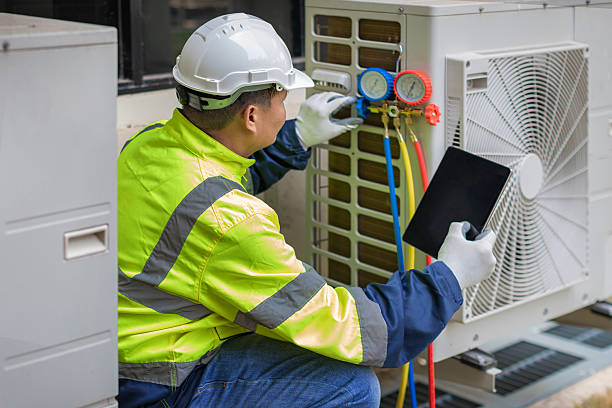
Every repair is diagnosed at the component level. We tell you exactly what failed and why before we quote a price.
The compressor is the costliest component in your AC system, and a misdiagnosed compressor replacement is an expensive mistake. Before recommending a compressor, our technicians perform a full electrical test -- winding resistance, ground fault check, and run capacitor load test -- combined with suction and discharge pressure measurement under actual operating conditions to confirm whether the compressor itself is the failure point or if another system condition is causing it to underperform.
A refrigerant undercharge reduces cooling capacity, causes evaporator coil icing, and forces the compressor to work against abnormal pressure ratios that shorten its lifespan. We locate every leak point using dual electronic and UV dye methods, perform EPA-compliant recovery of remaining refrigerant, repair the leak source, pressure-test and evacuate the system, and recharge to the exact manufacturer specification verified by subcooling measurement.
A fouled condenser coil raises system head pressure, reduces heat rejection efficiency, and can drive compressor discharge temperatures high enough to trigger thermal protection. We use low-pressure coil cleaning solutions and professional equipment to restore the coil's heat transfer capacity without damaging fins. In cases of physical coil damage, bent fins, or corrosion, we evaluate whether coil repair or replacement is the more cost-effective path.
Capacitors and contactors are high-failure components that are often the simplest and least expensive repair in an AC system. A run capacitor that's lost 10% or more of its rated capacitance causes motors to run hotter, draw more current, and fail prematurely. We test capacitors under load with a calibrated digital micro-farad meter rather than relying on visual inspection alone. Contactors are checked for pitting, arc damage, and coil voltage to ensure reliable operation through the rest of the cooling season.
Inadequate airflow across the evaporator coil causes the coil surface temperature to drop below freezing, leading to ice formation that eventually blocks airflow entirely and can cause liquid refrigerant to return to the compressor. We measure external static pressure, calculate actual airflow in CFM, and compare it against system design parameters to determine whether the problem is the motor, wheel, filter restriction, or duct design. Then we address the actual cause rather than just thawing the coil and leaving.
A faulty thermostat or miscommunication between the thermostat and the control board can produce cooling symptoms that mimic compressor failure, refrigerant loss, or sensor faults. We verify thermostat output voltage at each terminal, check the control board's input and output signals, and confirm that the system cycles on and off at the correct setpoints. We also evaluate smart thermostat compatibility when a wiring mismatch is the root cause of intermittent cooling complaints.
Every diagnosis starts with actual measurements -- superheat, subcooling, static pressure, amperage -- not assumptions based on symptom alone.
When temperatures in Red Hill, PA peak, we prioritize AC repair calls with dedicated summer dispatch and additional technician coverage for peak demand.
You see the full repair cost in writing before any work starts. What you approve is what you pay. No add-ons, no labor adjustments after the fact.
Capacitors, contactors, motors, sensors, and refrigerant in the most common residential grades are stocked so we complete most jobs on the first visit.
We keep you informed at every stage. No guesswork, no waiting in the dark.
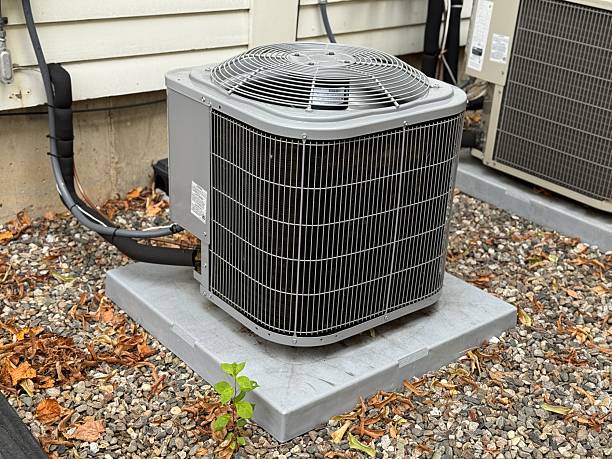
We confirm your appointment time and send a technician ETA so you're not waiting around all day. During peak summer periods, our dispatch prioritizes complete system failure calls first.
The technician measures system performance at the condenser and air handler -- pressures, temperatures, airflow, motor amperage -- and tests components in the identified failure zone using calibrated instruments.
You receive a written quote with the failed component identified, the specific repair required, and the total cost including parts and labor. Nothing starts without your go-ahead.
After the repair, we run the system through a full cooling cycle, verify supply air temperature and system pressures are within spec, and issue your written 12-month warranty document.
"Three other companies told me I needed a new compressor. All Year HVAC ran the numbers, found a refrigerant leak and a failing capacitor, fixed both, and my system has been running perfectly through the whole summer. Saved me thousands."
"Called at 8am, technician was here by noon. Found a fouled condenser coil and a contactor that was arcing. Cleaned the coil, replaced the contactor, system was putting out 19-degree temperature differential on the first test cycle. Excellent work."
"The tech explained everything in plain language, showed me the capacitor readings on his meter so I could see why it needed replacing, and didn't try to sell me anything extra. Honest, fast, and the AC has been ice cold ever since."
Our AC repair technicians are stationed across Red Hill, PA for fast response times throughout the entire region.
When your cooling system fails, every hour matters. Call All Year HVAC for expert Ac Repair in Red Hill and get your home comfortable again today.
Call +1-866-805-8548 Now