
Home
#HeaderServicesLinks
Call: +1-866-805-8548
Indoor Comfort Specialists

Air Conditioning Repair in Eatonville, WA

Iced evaporator coils, TXV valve failures, restricted airflow, and energy efficiency losses all have specific causes that require specific solutions. Our technicians trace the real problem and fix it at the source.

NATE Certified
Same-Day Service
Energy Efficiency Experts
Upfront Written Quotes
12-Month Warranty

Indoor Comfort Isn't Just About Temperature. It's About the Whole System.

There's a meaningful difference between an air conditioning repair that gets the system running again and one that actually restores the indoor comfort the system was designed to provide. The first kind stops at the obvious failure. The second kind asks why the system failed, what it's doing to the air quality and humidity levels in the home, and whether the repair alone will return the space to the comfort standard the homeowner expects. At All Year HVAC, our Air Conditioning Repair technicians in Eatonville work toward the second standard on every call.

Indoor comfort in a Eatonville, WA summer is a function of temperature, humidity, and air distribution working together. A system that cools to the set temperature but runs in short cycles doesn't have time to pull adequate moisture from the air, leaving the space feeling clammy even at 72 degrees. A system that runs long cycles but produces warm spots in distant rooms has an airflow distribution problem that's separate from the refrigerant circuit. Our technicians are trained to recognize all of these patterns and trace them to their specific mechanical or design causes rather than simply replacing the most commonly failed part and calling it resolved.

The metering device in your air conditioning system -- typically a thermostatic expansion valve or a fixed orifice -- is one of the most nuanced components in the refrigerant circuit, and it's also one of the most frequently misdiagnosed. A TXV valve that's hunting or sticking changes the superheat at the evaporator coil, which can cause icing, poor performance, or inconsistent cooling that mimics both refrigerant undercharge and compressor failure. Proper TXV diagnosis requires measuring actual superheat values under stable operating conditions using calibrated digital manifold gauges, not a visual assessment or a quick pressure check. We do this work the right way because it directly affects the quality and durability of the repair.

⚡

Energy Efficiency Note: A properly charged system running with a clean evaporator coil and adequate airflow can perform 20-30% more efficiently than one with even a minor refrigerant undercharge or partial airflow restriction. Our repairs routinely restore measurable energy savings alongside cooling performance.
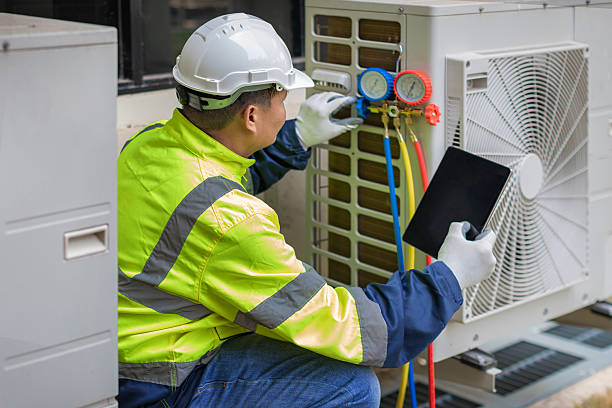
Air Conditioning Repair in Eatonville Eatonville, WA

Our Air Conditioning Repair Specialties

We diagnose and repair the full spectrum of air conditioning system failures with precision instruments, not guesswork.

Evaporator Coil Icing and Freeze-Up Repair

An iced evaporator coil is a symptom, not a root cause. The coil freezes because either refrigerant pressure is too low or airflow is too restricted to keep the coil surface above 32 degrees. We identify which condition is driving the freeze-up through combined pressure readings and airflow measurement, then address the underlying cause rather than simply thawing the coil and leaving. Running a frozen system can push liquid refrigerant to the compressor and cause internal damage that turns a minor repair into a major one.

  • Root-cause airflow vs. refrigerant diagnosis
  • Controlled thaw cycle before service
  • Evaporator coil cleaning where indicated
  • Airflow and pressure post-repair verification

TXV Valve Diagnosis and Replacement

Thermostatic expansion valve failures are among the most commonly misdiagnosed problems in residential air conditioning. A hunting or stuck TXV produces superheat values that fluctuate outside the design range, causing inconsistent cooling, coil icing, and compressor stress that mirrors several other system faults. We diagnose TXV function by measuring actual superheat under stable load conditions and comparing it against the manufacturer specification for your specific refrigerant and operating conditions. A confirmed TXV failure gets the valve replaced with an OEM-matched unit and the system recharged to exact spec before we verify superheat stability through a full cooling cycle.

  • Superheat measurement under stable load
  • Bulb and equalizer line inspection
  • OEM-matched replacement valves
  • Post-replacement superheat stability test

Airflow and Static Pressure Restoration

Poor airflow is the most underdiagnosed cause of air conditioning underperformance. A system that cools intermittently, leaves rooms at unequal temperatures, or runs for extended periods without reaching setpoint may have adequate refrigerant charge but inadequate airflow to utilize it. We use a digital manometer to measure total external static pressure, identify where in the duct system excessive resistance is concentrated, and determine whether the solution involves the blower, the ductwork, or the return air path. Correct airflow is what allows the system to dehumidify properly, not just cool.

  • Total static pressure measurement
  • Supply and return airflow balancing
  • Blower speed and wheel condition assessment
  • Duct restriction and leakage evaluation

Energy Efficiency Restoration

An air conditioning system operating at peak efficiency uses the least energy to produce the most comfort. When efficiency drops, your utility bills climb while the comfort level declines in parallel. Efficiency losses typically trace to one of several conditions: refrigerant undercharge reducing capacity, dirty evaporator or condenser coils increasing heat transfer resistance, mechanical friction in motors or the compressor, or electrical inefficiencies in the contactor or capacitor circuit. We measure actual system EER under operating conditions and compare it to the equipment's rated performance to quantify the gap and identify the contributing factors.

  • Operating efficiency vs. rated spec comparison
  • Coil heat transfer assessment and cleaning
  • Motor amperage and efficiency testing
  • Full refrigerant circuit performance measurement

Humidity and Dehumidification Performance

Excess indoor humidity during the cooling season is often a sign that the air conditioning system isn't running efficiently enough to remove moisture at the rate the space requires. The evaporator coil needs to stay cold and the system needs to run in sustained cycles to condense adequate moisture from the air. A system that's oversized short-cycles; one with a low refrigerant charge may not cool the coil adequately for moisture removal; one with poor airflow moves air too quickly for proper dehumidification. We evaluate the system's dehumidification performance as a distinct metric alongside temperature, not just as a byproduct of cooling.

  • Indoor relative humidity measurement
  • Cycle duration and dehumidification assessment
  • Coil temperature and dew point evaluation
  • Condensate production verification

Dual-Zone and Multi-Speed System Repairs

Variable-speed systems and multi-zone configurations introduce control complexity that single-stage systems don't have. A variable-speed air handler may operate correctly on low stage but not modulate properly under high-demand conditions. Zone damper systems may have a failed zone board, a stuck damper actuator, or a pressure bypass issue that results in over-pressurizing the ductwork. We work on both single-stage and variable-speed equipment, including inverter-driven systems, and have the manufacturer-specific diagnostic tooling to interface with proprietary control systems on major residential equipment brands.

  • Variable-speed motor and drive testing
  • Zone damper actuator verification
  • Zone control board diagnostics
  • Bypass damper pressure calibration
30%
Avg. Efficiency Restored
97%
Single-Visit Resolution
12mo
Parts and Labor Warranty
24/7
Emergency Coverage

Comfort-Focused. Measurement-Driven. Honest.

Full Comfort Assessment

Every repair call includes evaluation of temperature, humidity, and airflow -- not just the failed part. We fix the system, not just the symptom.

TXV and Metering Device Expertise

We properly diagnose metering device faults with superheat measurement rather than defaulting to refrigerant work that doesn't address the real problem.

Transparent Repair Economics

We tell you clearly when a repair makes financial sense and when a system's age and condition make replacement a better investment. No pressure either way.

Efficiency-Verified Repairs

We measure system performance after every repair to confirm not just that the system is running, but that it's running at or near its rated efficiency level.

How We Restore Your Indoor Comfort

From first call to verified comfort restoration -- here's exactly what a All Year HVAC repair appointment looks like.
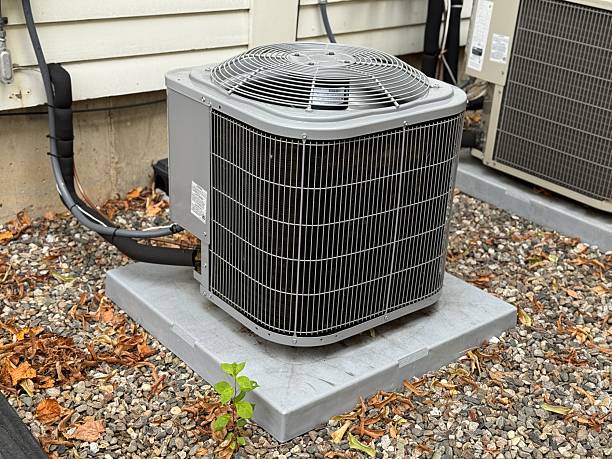
Air conditioning repair process
1

Comfort Complaint Assessment

The technician begins by understanding the specific comfort problem -- hot spots, humidity, short cycling, energy bills -- not just "the AC isn't working." This context guides the diagnostic sequence.

2

Whole-System Performance Measurement

We measure refrigerant circuit performance, airflow, motor amperage, coil temperatures, and control operation together -- because comfort problems often involve multiple interacting factors.

3

Written Quote and Repair Approval

You receive a written quote identifying the root cause, the required repair, and the expected comfort outcome. We include a note on overall system condition so you have the full picture.

4

Repair and Comfort Verification

After the repair, we run a full cooling cycle and measure supply air temperature, system pressures, and indoor humidity to confirm the space is actually comfortable -- not just that the system is running.

Eatonville Homeowners Share Their Experience

★★★★★

"The house was cool but always felt damp. The tech found that our TXV valve was stuck partially closed and our superheat was running too high to allow proper dehumidification. After the valve replacement and recharge, the humidity dropped noticeably within the first day."

Teresa N.
Homeowner, Eatonville WA
★★★★★

"Our AC kept icing up. Two previous companies just thawed the coil and added refrigerant, which didn't last. All Year HVAC measured our airflow, found the blower wheel was caked with debris reducing airflow by 40%, cleaned it, and the system hasn't iced since."

Kevin O.
Property Manager, Eatonville, WA
★★★★★

"Our utility bills were ridiculous even though the AC was running. The tech showed me that our system was only operating at 68% efficiency due to a partially fouled evaporator coil and a refrigerant undercharge. After the service, our next bill was noticeably lower."

Gail W.
Homeowner, Eatonville

Air Conditioning Repair FAQs

A thermostatic expansion valve, or TXV, is the metering device in your air conditioning system that controls how much liquid refrigerant enters the evaporator coil. It modulates in response to the refrigerant's temperature and pressure at the evaporator outlet, which is measured by a sensing bulb attached to the suction line. A properly functioning TXV maintains a stable superheat value -- typically 8 to 12 degrees for most residential systems. When a TXV begins to fail, it may hunt -- oscillate between over-feeding and under-feeding refrigerant -- causing fluctuating system performance and coil icing. A stuck-closed TXV starves the evaporator of refrigerant, causing low suction pressure and high superheat that mimics refrigerant undercharge. A stuck-open TXV floods the evaporator, causing low superheat and liquid refrigerant returning to the compressor. All three conditions require superheat measurement to distinguish from each other and from actual refrigerant problems.
Dehumidification happens as a byproduct of cooling: moisture in the air condenses on the cold evaporator coil surface and drains away as condensate. For this to happen effectively, the coil needs to be cold enough and the air needs to spend adequate time in contact with it. Several conditions prevent effective dehumidification. An oversized system reaches the temperature setpoint quickly and shuts off before completing a full humidity-removal cycle. A system with low refrigerant charge may not cool the coil adequately for condensation. A high airflow rate (from an over-sped blower or undersized return duct) moves air across the coil too quickly for moisture removal. A dirty coil or partially iced coil has reduced surface area for condensation. Each of these causes requires a different solution, which is why measuring both temperature and humidity as part of the diagnostic process gives a much clearer picture of what's actually happening in your system.
There are several indicators that your AC may be running below its rated efficiency. Rising utility bills without a change in usage patterns or rate structure are a common early sign. A system that runs much longer than it used to in order to reach the same setpoint may have reduced capacity from a refrigerant issue, coil fouling, or a mechanical problem. Reduced supply air temperature -- you can feel this from a register -- indicates the system is transferring less heat from the air to the refrigerant than it should be. A system that runs correctly but produces supply air only 12 to 15 degrees cooler than return air temperature, when it should produce 18 to 22 degrees of drop, is operating at reduced capacity. We can measure your system's actual operating efficiency during a service call and compare it against the manufacturer specification to quantify the gap.
Evaporator coil freezing occurs whenever the coil surface drops below 32 degrees Fahrenheit. This happens under two conditions: the refrigerant in the coil is at too low a pressure to absorb heat efficiently, or there is too little airflow across the coil to keep the surface temperature above freezing. Low refrigerant charge is the most common refrigerant-side cause -- the reduced charge expands to fill the same coil volume at lower pressure, dropping the coil surface temperature below freezing. Restricted airflow from a clogged filter, closed or blocked registers, a failing blower, or a dirty blower wheel reduces the heat load on the coil, allowing it to drop below freezing as well. Occasionally a TXV failure that over-feeds refrigerant can also cause icing by flooding the coil. The correct response when you discover the coil is iced is to switch the system to fan-only mode to thaw it before attempting diagnosis -- running a frozen system risks compressor damage from liquid refrigerant in the suction line.
Yes, and it's one of the most common indirect causes of compressor failure and evaporator coil damage. Inadequate airflow causes the evaporator coil to ice over, which allows liquid refrigerant to travel back to the compressor through the suction line -- a condition called liquid slugging that destroys compressor valves. Over time, restricted airflow also causes the system to operate at higher compression ratios, which increases compressor operating temperature and degrades lubricating oil. A blower operating against excessive static pressure from duct restrictions, undersized ductwork, or a clogged filter draws more amperage than rated, shortening motor winding life. The damage from chronic low airflow often accumulates slowly enough that the connection isn't obvious until a major component fails, which is why static pressure measurement during any service call can be valuable for identifying hidden risks.
The expected lifespan of a residential central air conditioning system in a Eatonville, WA climate is typically 14 to 18 years with proper maintenance. A quality component-level repair -- replacing a failed part rather than masking a problem -- should last the remaining useful life of the system without needing to address the same failure point again. The factors that most reliably extend system life after a repair are maintaining proper refrigerant charge, keeping the filter clean and airflow adequate, and having the coils inspected and cleaned every few years. The repairs most likely to recur prematurely are ones where the root cause was addressed only partially -- for example, replacing a compressor without also cleaning the system of the acid and debris from the failed compressor, or topping off refrigerant without finding and fixing the leak source. We ensure every repair addresses the complete failure scenario, not just the most obvious piece of it.

Serving Eatonville and Across Eatonville, WA

Our Air Conditioning Repair technicians serve the full Eatonville, WA region with same-day availability during the cooling season.

Eatonville, WA Surrounding Areas All Eatonville, WA Zip Codes

Ready to Feel Comfortable Again?

Stop living with poor cooling, high humidity, or rising energy bills. Call All Year HVAC for expert Air Conditioning Repair in Eatonville and get a written comfort assessment today.

Call +1-866-805-8548 Now
Our Services in Eatonville, WA

Eatonville is a town in Pierce County, Washington, United States. It is 32 mi (51 km) south of Tacoma. The population was 2,845 at the 2020 census. The town motto is "Better Together".

Zip Codes in Eatonville, WA that we also serve: 98328

Cities Close To Eatonville, WA That We Also Serve


Air Conditioning Repair Express #1
★ 4.9 (120+ Reviews)
Dispatch Center, WA
Call +1-866-805-8548
Air Conditioning Repair Express #2
★ 4.9 (120+ Reviews)
Dispatch Center, WA
Call +1-866-805-8548
Air Conditioning Repair Express #3
★ 4.9 (120+ Reviews)
Dispatch Center, WA
Call +1-866-805-8548
Air Conditioning Repair Express #4
★ 4.9 (120+ Reviews)
Dispatch Center, WA
Call +1-866-805-8548
Air Conditioning Repair Express #5
★ 4.9 (120+ Reviews)
Dispatch Center, WA
Call +1-866-805-8548
Air Conditioning Repair Express #6
★ 4.9 (120+ Reviews)
Dispatch Center, WA
Call +1-866-805-8548
Call Now
🟢 Techs On Duty in Eatonville, WA Call +1-866-805-8548