
- Home
-
#HeaderServicesLinks
- Call: +1-866-805-8548
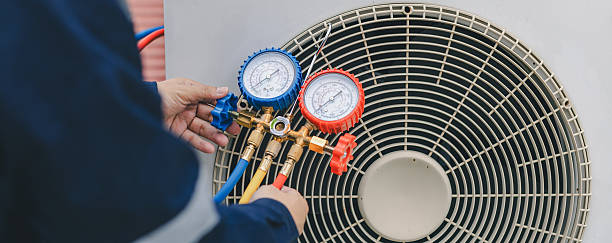
Reversing valve failures, defrost cycle issues, auxiliary heat lockout, refrigerant charge problems in heating mode, and dual-fuel system coordination. We diagnose heat pumps correctly the first time.
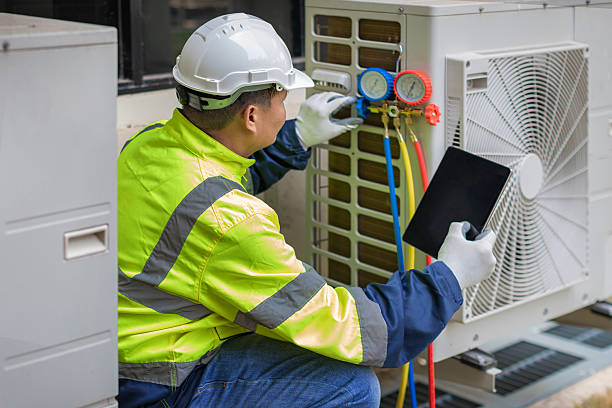
Heat Pump Repair Specialists
A heat pump is fundamentally a more complex system than a straight cooling unit, and diagnosing one correctly requires understanding how it operates in both heating and cooling modes. Many technicians who are competent with central air conditioning lack confidence with heat pump-specific failures, particularly the ones that show up only during the heating season. At All Year HVAC, we have repaired hundreds of heat pumps across Miami, FL, and we approach each diagnostic with the specific vocabulary and testing procedures that heat pump repair actually requires.
The reversing valve is the defining component of any heat pump. This solenoid-controlled valve switches the refrigerant flow direction between heating and cooling modes. A reversing valve that is partially stuck can allow some refrigerant to bypass through the valve in the wrong direction, which shows up as a system that heats weakly, or cools weakly, or alternates between the two in a confusing way. Diagnosing a suspect reversing valve requires measuring suction and discharge pressures in both modes and comparing them against what the system should produce. A valve that is mechanically stuck versus one where the solenoid coil has failed requires a different repair approach, and distinguishing between the two before replacing anything saves time and parts cost.
Defrost cycle issues are another heat pump-specific failure mode that most homeowners have never heard of until their system develops one. In heating mode, the outdoor coil acts as the evaporator and extracts heat from cold outdoor air. When outdoor temperatures drop far enough, frost accumulates on the outdoor coil. The defrost control board triggers a defrost cycle that temporarily reverses the system and melts that frost. When the defrost board, defrost thermostat, or defrost terminator fails, the system either never defrosts and develops an ice block on the outdoor coil, or defrosts too frequently and spends time in reverse mode when it should be heating. We test defrost control components specifically during heat pump diagnostics rather than applying generic HVAC diagnostic procedures that do not address heat pump behavior.
Refrigerant charge in heating mode behaves differently than in cooling mode. Target superheat and subcooling values shift based on outdoor ambient and whether the system is operating in heat or cool mode. A technician who only checks refrigerant charge against cooling mode targets can incorrectly characterize a properly charged heat pump as low when it is actually operating normally for current ambient conditions. We use mode-specific target values when evaluating refrigerant charge on heat pump calls in Miami.
Dual-fuel systems, which pair a heat pump with a gas furnace backup, add the complexity of the changeover lockout temperature. The lockout is the outdoor temperature below which the heat pump stops operating and the gas furnace takes over, because below that threshold the heat pump's COP drops below economic justification. An improperly set lockout temperature causes the system to run gas backup too high (wasting money) or to run the heat pump at very low outdoor temperatures (appropriate for cold-climate units only). We set and verify dual-fuel lockout parameters as part of any repair that touches the thermostat or control system on a dual-fuel setup in Miami.
Heat Pump Repair Services
The reversing valve is the component that switches a heat pump between heating and cooling mode. When it fails partially, the system may heat and cool simultaneously, heat weakly, or cool weakly depending on which way the valve is stuck. We diagnose reversing valve issues by measuring suction and discharge pressures in both operating modes and comparing them against the expected values. A solenoid coil failure is different from a mechanically stuck valve slug, and we identify which before ordering parts. Reversing valve replacement in Miami is a full-system repair that includes nitrogen pressure testing and refrigerant recharge after component replacement.
Heat pumps in heating mode develop frost on the outdoor coil in cold weather, which is normal. The defrost control system should melt that frost on a timed or demand-triggered cycle and return the system to heating mode. When the defrost board, defrost thermostat, or defrost terminator fails, the coil ices over and the system loses heating capacity progressively until it shuts down. We test each defrost system component individually to identify the failed component accurately rather than replacing all of them by assumption. Defrost board failure is the most common cause, but defrost thermostat positioning and calibration are frequently the actual culprit.
Verifying refrigerant charge in heating mode requires using heating-mode target values for superheat and subcooling, not the same targets used for cooling mode diagnosis. The outdoor coil in heating mode is the evaporator, so suction pressure reflects outdoor ambient temperature and the system's ability to extract heat from cold air. We measure system pressures in heating mode and compare them against manufacturer heating mode targets adjusted for current outdoor temperature. A heat pump operating in the low-temperature range of its rated capacity should show specific pressure values that differ significantly from what the same unit shows on a warm day in cooling mode. Correct refrigerant charge in heating mode is critical for system COP and compressor longevity.
Heat pumps use electric resistance auxiliary heat strips as a backup heat source during defrost cycles and during periods when outdoor temperatures drop below efficient operating range. Auxiliary heat lockout settings, which prevent the strips from energizing above a set outdoor temperature, prevent the strips from competing with the heat pump during normal operation. When these settings are misconfigured, the auxiliary heat runs constantly alongside the heat pump, which dramatically increases electricity consumption. We test auxiliary heat sequencer operation, verify lockout thermostat settings, and check electric resistance strips for element failures and proper amp draw on every heat pump repair call in Miami.
Dual-fuel systems pair a heat pump with a gas furnace and switch between the two based on outdoor temperature and relative operating cost. The changeover logic lives in the thermostat and depends on a correctly set balance point temperature. When the balance point is set too high, the gas furnace runs at temperatures where the heat pump would be more economical. When it is set too low, the heat pump runs at temperatures where its COP has dropped so far that gas backup would cost less. Repairs to dual-fuel systems require understanding both the heat pump and the furnace, and we handle both in-house rather than referring you to separate contractors for the two sides of the system.
Standard heat pumps are rated for heating capacity at 47 degrees Fahrenheit outdoor temperature. As outdoor temperature drops, heating capacity and COP decline. Cold-climate heat pumps (variable-speed inverter units rated for operation at 5 degrees or lower) behave differently at low temperatures than conventional heat pumps, and diagnosis must account for this. A system that appears to be underperforming may actually be operating normally for current outdoor conditions and the equipment's rated capacity curve. We evaluate cold-weather performance against the unit's specific capacity data rather than against generic heat pump expectations, so the diagnosis reflects reality.
Why Choose Us
We use testing procedures specific to heat pump operation in both modes, not standard air conditioner procedures applied to a different system. This means faster, more accurate diagnosis of reversing valve, defrost, and heating-mode refrigerant issues.
We service both sides of dual-fuel systems in-house. One contractor, one call, one coordination point for a system that involves both a heat pump and a gas furnace working together.
We verify refrigerant charge using heating-mode target values adjusted for outdoor ambient temperature. This prevents the common misdiagnosis of a properly charged heat pump as refrigerant-low based on cooling mode standards.
A heat pump failure in cold weather is not a routine service call. We offer priority scheduling for heat pump failures during cold weather events in Miami, Miami, FL, because a home without heat in winter is an urgent situation.
Our Process
We start by determining whether the failure occurs in heating mode, cooling mode, or both, and what specific symptom pattern the homeowner has observed. Heat pump symptoms are often mode-specific and guide the diagnostic path significantly.
We test the reversing valve solenoid, defrost control board, auxiliary heat sequencers, and thermostat staging before touching refrigerant. Many heat pump failures are electrical or control-related rather than refrigerant issues.
We connect gauges and evaluate system pressures against mode-specific target values adjusted for current outdoor temperature. Refrigerant charge is evaluated in the mode where the problem is occurring, not the opposite mode.
We complete the identified repair, verify system operation in both modes, and document findings and repair actions. For dual-fuel systems, we confirm proper changeover operation after any repair affecting the control system.
Customer Reviews
"Had two other companies look at my heat pump before calling All Year HVAC. Both said it needed refrigerant and added some without fixing the problem. The All Year HVAC tech diagnosed a reversing valve that was partially stuck and tested it correctly in heating mode to prove it. Fixed the valve and it has worked perfectly since. Wish I had called them first."
"My dual-fuel system was running the gas furnace constantly even in mild temperatures. All Year HVAC found the balance point setting was incorrectly set too high by whoever installed the thermostat. A simple recalibration and the system now uses the heat pump where it should and switches to gas when it makes sense. My gas bills dropped noticeably the following month."
"The outdoor coil was completely encased in ice. Previous tech said the refrigerant was low. All Year HVAC identified a failed defrost thermostat that was preventing defrost cycles from initiating. Fixed the defrost component, the ice cleared, and they verified refrigerant charge in heating mode at the correct outdoor ambient. System has worked through the rest of the winter without issue."
FAQ
Coverage Area
Our heat pump repair technicians serve Miami and surrounding communities throughout Miami, FL. We offer priority scheduling for heating system failures during cold weather periods, because a home without heat in winter is an urgent problem.
Call us any day of the week for heat pump repair service in Miami. We carry common heat pump components including reversing valves, defrost boards, capacitors, and contactor assemblies to reduce repair time on first visits.
Call for Priority Service: +1-866-805-8548
All Year HVAC diagnoses heat pumps with mode-specific testing procedures. No guesswork, no refrigerant added before identifying the root cause, and priority service during cold weather.
Call +1-866-805-8548