
Emergency HVAC Dispatch Available Right Now -- +1-866-805-8548
Home
#HeaderServicesLinks
Emergency: +1-866-805-8548
Dispatching Now -- 24/7/365

Emergency Hvac in Washington, DC
We're On The Way

Complete system failure, dangerous CO readings, extreme cold with no heat -- these can't wait until morning. Our emergency technicians are dispatched immediately, any hour, any day in Washington and across Washington, DC.

Typical emergency response: under 2 hours. No appointment needed.
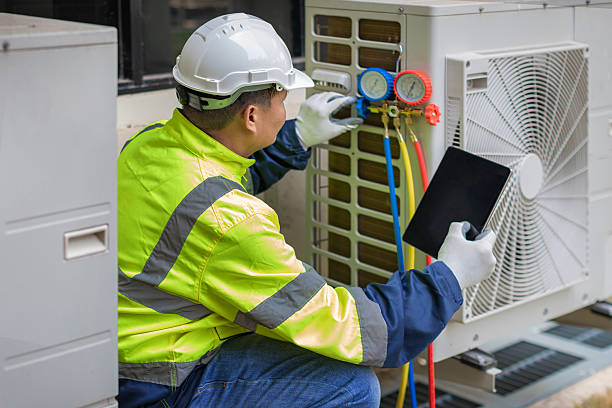
Answering Calls Right Now
Under 2-Hour Response
Licensed Emergency Techs
No Overtime Surprises
Fully Stocked Emergency Trucks
Emergency Hvac in Washington Washington, DC

If You Smell Gas or Suspect Carbon Monoxide:

Leave the building immediately, do not operate any switches or appliances, and call 911 from outside. Once emergency services have cleared the space, call us at +1-866-805-8548 for immediate HVAC system assessment and repair.

When the System Fails at the Worst Possible Moment

HVAC systems fail at night. They fail on the coldest weekend of the year. They fail during heat waves when every HVAC company in Washington is already booked solid. That's not a coincidence -- systems fail under strain, and extreme weather is exactly when they're working hardest. All Year HVAC exists to be the company that actually picks up the phone and shows up when those calls come in.

Our emergency dispatch is not an answering service that takes a message for the morning crew. When you call +1-866-805-8548 at 2am with no heat and temperatures dropping, you reach a live dispatcher who immediately checks technician availability and routes the closest available emergency tech to your location. Most emergency calls in Washington result in a technician on site within two hours. We maintain emergency-ready staffing year-round, with additional coverage during peak seasons when demand spikes.

The hazard profile of an HVAC emergency varies significantly by the type of failure. A complete cooling loss during a heat advisory creates dangerous conditions for elderly residents and young children within hours. A complete heat loss during a winter cold snap in Washington, DC can push indoor temperatures below safe levels overnight and can result in frozen pipes that cause their own cascade of damage. A gas furnace that locks out on safety may be indicating a cracked heat exchanger and potential carbon monoxide intrusion -- that's a scenario that requires immediate response and cannot wait for a next-day service window.

Our emergency technicians carry the same diagnostic equipment and parts inventory as our daytime crews. They're not sent out with a flashlight and a voltmeter to assess the situation and schedule a real repair for the morning. They come equipped to complete the repair on the spot for the vast majority of emergency failures -- a capacitor, a control board, a failed igniter, a refrigerant undercharge. When the repair requires parts not on the truck, we tell you immediately and either source the part for overnight delivery or arrange a temporary solution to stabilize your home until the repair can be completed the following morning.

What We Respond To Around the Clock

Every scenario below is a genuine emergency. We dispatch for all of them, day or night, without extra fees for evening or weekend calls.

Complete Heating Failure in Extreme Cold

A total heat loss during a winter cold snap in Washington, DC is not an inconvenience -- it's a health emergency. Indoor temperatures can drop to dangerous levels within hours, and water pipes in uninsulated spaces can freeze and burst. Our emergency technicians arrive with diagnostic equipment and a full parts complement, ready to restore heat in a single visit for the majority of furnace failure scenarios including igniter failure, gas valve faults, and control board lockouts.

  • All furnace types and fuel sources
  • Heat pump emergency supplemental heat activation
  • Pipe-freeze risk assessment included
  • Temporary heat source sourcing when needed

Carbon Monoxide and Combustion Gas Risks

A CO alarm triggered by a furnace or boiler is a life-safety event. Even when the alarm seems intermittent or low-level, it demands immediate investigation. Our emergency technicians carry calibrated CO detectors and combustion analyzers to verify whether combustion gases are entering the living space, identify the source, and determine whether the system can be safely operated. We do not clear systems for operation without confirming the cause of the CO event and addressing it.

  • Calibrated CO concentration measurement
  • Heat exchanger integrity assessment
  • Combustion gas spillage testing
  • System lockout and safety documentation

Complete Cooling Loss During Heat Advisory

When outdoor temperatures peak and your AC fails completely, indoor temperatures in a closed-up home can become dangerous within a few hours for vulnerable occupants. We treat complete cooling loss during heat advisory conditions as the same priority as heating failure in winter. Our emergency cooling response addresses compressor failures, electrical faults, refrigerant loss, and control failures for central air systems and ductless mini-splits.

  • Immediate compressor and control assessment
  • Emergency refrigerant service
  • All central and ductless system types
  • Wellness check resources provided if applicable

Gas Smell or Suspected Gas Leak

A gas smell in or near your HVAC system is always treated as an emergency. If you can smell gas, evacuate and call your gas utility's emergency line and 911 before calling us. Once the utility has confirmed the space is safe, our emergency technicians assess the HVAC system's gas supply connections, valves, heat exchanger, and burner assembly to determine the source and whether any components need replacement before the system can be safely returned to service.

  • Gas piping and connection assessment
  • Gas valve leak testing
  • Burner and combustion chamber inspection
  • Clearance documentation for gas utility

Electrical Faults, Tripped Breakers, Burning Smell

A burning smell from an HVAC system or a breaker that trips every time the system tries to start indicates an electrical fault that should not be ignored or bypassed. Overheated motor windings, failing contactor coils, and short-circuited control boards can all present this way. Our emergency technicians isolate the faulted component, confirm there is no risk of fire, and either repair the fault or make the system safe until a full repair can be completed.

  • Motor and contactor fault isolation
  • Control board short-circuit diagnosis
  • Wiring insulation inspection
  • Safe-lockout and documentation

Water Overflow from Condensate System

A blocked condensate drain or failed condensate pump can cause the secondary drain pan to overflow, resulting in ceiling water damage or interior water intrusion. While not a health-safety emergency in the same category as CO or extreme temperature loss, water damage escalates quickly and can result in mold growth within 24 to 48 hours. Our emergency response clears the drain blockage, checks the secondary pan integrity, and confirms the system is draining properly before leaving.

  • Condensate line clearing and flush
  • Condensate pump testing and replacement
  • Secondary pan sensor verification
  • Drain slope and configuration check
<2hr
Emergency Response Time
24/7
Live Dispatch, Every Day
365
Days Per Year Available
95%
Same-Visit Resolution

The Emergency HVAC Team That Actually Shows Up

Live Answering, Any Hour

Our emergency line is answered by a real dispatcher, not an answering machine. You get a technician ETA within minutes of your call.

Emergency-Ready Parts Inventory

Emergency trucks carry expanded parts inventories for the most common after-hours failures. We repair, not just assess and schedule.

Safety-First Response Protocol

CO, gas, and electrical emergencies follow a defined safety protocol. Our technicians carry calibrated detection equipment and never clear an unsafe system.

Upfront Emergency Pricing

You receive a written repair quote before work starts, regardless of the hour. We don't adjust prices based on the urgency of your situation.

What Happens After You Call

From your call to a restored system -- here's exactly what to expect when you reach our emergency line.
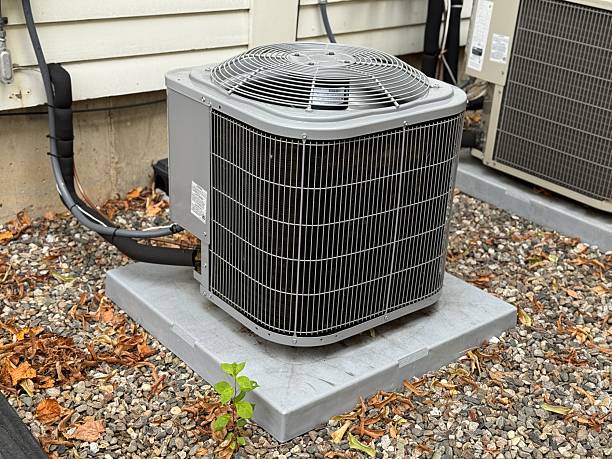
Emergency HVAC response
1

Live Dispatcher Answers Immediately

A real person answers your call, gathers the situation details, and confirms whether this is a life-safety event requiring specific pre-arrival steps. You get a technician ETA before you hang up.

2

Technician Arrives Fully Equipped

Our emergency tech arrives with diagnostic instruments, CO and combustion detection equipment, and a full emergency parts inventory. This is a repair dispatch, not a site assessment.

3

Safety Assessment First, Then Diagnosis

For CO, gas, or electrical scenarios, we complete a safety assessment before diagnostic work. You'll know immediately whether the space is safe and what specific hazard we identified.

4

Repair Completed and System Verified

After completing the repair, we run the system through a full operational cycle, verify it's performing correctly, and document the repair. You sleep in a comfortable, safe home.

They Called at Midnight. We Showed Up.

★★★★★

"CO alarm went off at 11pm. Called All Year HVAC, they were at my door in 90 minutes. Found a hairline crack in the heat exchanger. They locked out the system, kept my family safe, and had a full repair crew back the next morning. Cannot thank them enough."

Robert H.
Homeowner, Washington DC
★★★★★

"Furnace died at 10pm on the coldest night of the year with two little kids in the house. Tech was here in under two hours, found a failed igniter, had one on the truck, and heat was back on by midnight. Absolute lifesavers."

Angela M.
Parent and Homeowner, Washington, DC
★★★★★

"AC completely failed on a Saturday during a heat wave with my elderly mother visiting. All Year HVAC answered on the first ring, dispatched immediately, and had us cooling again by early afternoon. Professional, quick, and they didn't gouge on the emergency pricing."

Linda P.
Homeowner, Washington

Questions About Emergency HVAC Service

An HVAC emergency is any situation where the failure creates a health, safety, or property risk that cannot wait for a normal business-hours appointment. This includes: complete heating loss when outdoor or indoor temperatures are approaching dangerous levels; carbon monoxide alarm activation related to HVAC equipment; a gas smell near HVAC equipment; complete cooling loss during a heat advisory with vulnerable occupants; burning smells or electrical faults from HVAC equipment; and water overflow from a condensate system that is actively causing property damage. If you're unsure, call us and describe the situation -- our dispatchers are trained to assess urgency and will give you an honest answer about response time.
Our emergency response service is priced with a standard diagnostic fee that covers after-hours dispatch. Repair costs are quoted based on the actual work required, not inflated because the call came in after 5pm or on a weekend. You will receive a written repair quote before any work begins, regardless of the hour, and you can decline the repair if you choose. We do not add surprise fees after the work is complete. Our goal is to be the emergency service you actually want to call when something goes wrong, not one that takes advantage of a bad situation.
For heating emergencies: close off unused rooms to concentrate heat, use electric space heaters if available, layer clothing and blankets, and identify the warmest interior room. For cooling emergencies: close blinds and curtains on sun-facing windows, move to lower floors where temperatures are cooler, use fans to circulate air, and stay hydrated. For CO alarm activations: leave immediately, do not turn any switches or appliances on or off, call 911 from outside, and don't re-enter until emergency services have cleared the space. For gas smell: evacuate, don't operate any switches, call the gas utility and 911 from outside. Our dispatcher will walk you through specific steps when you call.
Our target emergency response time in the Washington area is under two hours from call confirmation to technician arrival. Actual response time depends on current call volume, traffic conditions, and your specific location within our service area. During peak emergency periods -- severe weather events, extended heat waves, extended cold snaps -- response times may extend. Our dispatcher will give you an honest ETA when you call and will update you if conditions change. We maintain additional emergency staffing during weather event forecasts precisely to protect our response time commitments.
Our emergency trucks are stocked with an expanded inventory specifically for after-hours calls. For the most common emergency failures -- capacitors, contactors, igniters, flame sensors, control boards, blower motors in common sizes, and refrigerant -- we carry what's needed to complete the repair on the emergency visit. Approximately 95% of our emergency calls are fully resolved on the first visit. When a required part isn't on the truck, we tell you immediately, source it for earliest possible delivery, and either provide a temporary solution to stabilize your home or clearly communicate what to expect overnight so you can make safe arrangements.
Yes. A CO alarm activation should always be treated as an emergency regardless of whether the alarm seems low-level or intermittent. Carbon monoxide is odorless and colorless, and low-level exposure causes symptoms -- headache, nausea, fatigue -- that are easy to attribute to other causes. An intermittent alarm may indicate a crack that only allows CO intrusion under certain operating conditions, which makes it harder to detect but no less dangerous. Evacuate first, call 911 to have emergency services verify the space is safe, and then call us to inspect and assess the HVAC system. We will not clear any system for operation without confirming the source of CO and addressing it fully.

Emergency Response Across Washington, DC

Our emergency technicians are positioned across the region. No matter where you are in Washington, DC, we're working to get to you as fast as possible.

Washington, DC Surrounding Communities All Washington, DC Zip Codes
Call Emergency Line: +1-866-805-8548

Don't Wait -- Call Our Emergency Line Now

Every minute without heat or cooling in an extreme weather event matters. A real dispatcher is answering right now. Call All Year HVAC for Emergency Hvac in Washington.

Call +1-866-805-8548 -- Available Right Now
Our Services in Washington, DC

Washington, D.C., formally the District of Columbia and commonly called Washington or D.C., is the capital city of the United States. The city is located on the east bank of the Potomac River, which forms its southwestern border with Virginia and borders Maryland to its north and east. The city was named for George Washington, a Founding Father, victorious commanding general of the Continental Army in the American Revolutionary War and the first president of the United States who is sometimes referred to as "Father of his country". The district is named for Columbia, the female personification of the nation.

Zip Codes in Washington, DC that we also serve: 20250 20010 20011 20012 20015 20520 20064 20418 20415 20388 20319 20020 20024 20510 20515 20591 20427 20422 20542 20540 20240 20245 20390 20005 20004 20003 20002 20001 20009 20008 20016 20317 20059 20057 20052 20017 20018 20565 20566 20560 20220 20551 20019 20230 20373 20260 20007 20006 20032 20036 20037 20204 20431 20045 20408 20535 20530 20013 20022 20026 20027 20029 20030 20033 20035 20038 20039 20040 20042 20043 20044 20047 20049 20050 20053 20055 20056 20058 20060 20061 20062 20063 20065 20066 20067 20068 20069 20070 20071 20073 20074 20075 20076 20077 20078 20080 20081 20082 20090 20091 20201 20202 20203 20206 20207 20208 20210 20211 20212 20213 20214 20215 20216 20217 20218 20219 20221 20222 20223 20224 20226 20227 20228 20229 20232 20233 20235 20237 20238 20239 20241 20242 20244 20251 20252 20254 20261 20262 20265 20266 20268 20270 20277 20289 20299 20301 20303 20306 20310 20314 20318 20330 20340 20350 20355 20370 20372 20374 20375 20376 20380 20389 20391 20392 20393 20394 20395 20398 20401 20402 20403 20404 20405 20406 20407 20410 20411 20412 20413 20414 20416 20417 20419 20420 20421 20423 20424 20425 20426 20428 20429 20433 20434 20435 20436 20437 20439 20440 20441 20442 20444 20447 20451 20453 20456 20460 20463 20468 20469 20470 20472 20500 20501 20502 20503 20504 20505 20506 20507 20508 20509 20511 20521 20522 20523 20524 20525 20526 20527 20528 20529 20531 20533 20534 20536 20537 20538 20539 20541 20543 20544 20546 20547 20548 20549 20552 20553 20554 20555 20557 20559 20570 20571 20572 20573 20575 20576 20577 20578 20579 20580 20581 20585 20586 20590 20593 20594 20597 20599 56901 56902 56904 56908 56915 56920 56933 56935 56944 56945 56950 56965 56967 56972 56998 56999 20041 20409

Cities Close To Washington, DC That We Also Serve


Emergency Hvac Express #1
★ 4.9 (120+ Reviews)
Dispatch Center, DC
Call +1-866-805-8548
Emergency Hvac Express #2
★ 4.9 (120+ Reviews)
Dispatch Center, DC
Call +1-866-805-8548
Emergency Hvac Express #3
★ 4.9 (120+ Reviews)
Dispatch Center, DC
Call +1-866-805-8548
Emergency Hvac Express #4
★ 4.9 (120+ Reviews)
Dispatch Center, DC
Call +1-866-805-8548
Emergency Hvac Express #5
★ 4.9 (120+ Reviews)
Dispatch Center, DC
Call +1-866-805-8548
Emergency Hvac Express #6
★ 4.9 (120+ Reviews)
Dispatch Center, DC
Call +1-866-805-8548
Emergency Line
🟢 Techs On Duty in Washington, DC Call +1-866-805-8548